A dishwasher saves time and effort, but that doesn’t mean the appliance cleans itself. Food particles, grease, soap residue, and mineral deposits can slowly build up inside the machine. Eventually, you may notice an unpleasant smell, cloudy dishes, or a dishwasher that doesn’t seem to clean as effectively as it once did.
The good news is that you can often handle routine dishwasher maintenance with simple household supplies. If you’re wondering how to clean a dishwasher naturally, this step-by-step guide will show you a practical approach using ingredients such as warm water, baking soda, and white vinegar where appropriate.
Before you begin, always check your dishwasher’s user manual. Manufacturers may have specific instructions about which products are safe to use, and not every dishwasher is suitable for homemade cleaning methods.
Why Should You Clean Your Dishwasher?
A dishwasher comes into contact with food residue every day. Even when dishes look clean after a cycle, small particles can remain behind.
The filter is one of the most common places for food debris to collect. Grease can also build up around the door seal, while mineral deposits from hard water may accumulate on the interior and spray arms.
Regular cleaning can help keep these areas under control. It may also reduce unpleasant odors and help your dishwasher continue working as expected.
You don’t need to deep-clean the appliance every week. A quick inspection and regular maintenance are usually enough to prevent heavy buildup.
What You’ll Need
You probably already have most of the supplies needed for a basic natural clean.
Gather:
-
Warm water
-
Baking soda
-
White vinegar, if approved by the manufacturer
-
Mild dish soap
-
A microfiber cloth
-
Soft sponge
-
Old toothbrush or small cleaning brush
-
Rubber gloves
-
A small bowl
Avoid abrasive pads, sharp tools, and unapproved chemicals that could damage the dishwasher’s surfaces or components.
Step 1: Empty the Dishwasher
Start by removing all dishes, glasses, utensils, and other items.
Take out the bottom rack if it gives you better access to the base of the dishwasher. Remove the upper rack too if your model allows this and you need additional room to work.
Look around the bottom of the tub for loose food particles, paper labels, or other debris. Remove anything that can be picked up easily.
Starting with an empty dishwasher makes it much easier to see where buildup has collected.
Step 2: Clean the Filter
If you’re learning how to clean a dishwasher naturally, don’t skip the filter. It plays an important role in trapping food particles during washing.
Locate the filter at the bottom of the dishwasher. The design varies between models, so check your user manual if you’re unsure how to remove it.
Once removed, rinse the filter under warm water. Use a soft toothbrush or small brush to gently loosen food and grease stuck in the mesh.
Avoid using excessive force, as the filter can be damaged.
Rinse it thoroughly and put it back in place correctly. A loose or incorrectly installed filter can cause problems during future cycles.
Step 3: Inspect the Spray Arms
The spray arms need clear openings so water can reach your dishes.
Check the small holes along each spray arm for trapped food or mineral deposits. If you notice buildup, gently clean the affected areas with a soft brush.
Don’t force sharp objects deep into the openings. If the spray arm can be removed according to the manufacturer’s instructions, you may be able to rinse it more thoroughly.
After cleaning, make sure the spray arms can rotate freely without hitting dishes or the racks.
Step 4: Wipe the Door and Rubber Seal
The door seal is easy to overlook, but it can collect food residue, grease, and moisture.
Dip a microfiber cloth in warm water and wipe carefully around the rubber gasket. For stubborn grime, use a small amount of mild dish soap diluted with water.
Pay special attention to corners and folds where debris may hide.
Avoid using harsh chemicals unless they’re specifically approved for your dishwasher. Once you’ve finished cleaning, wipe away any soap residue with a clean, damp cloth.
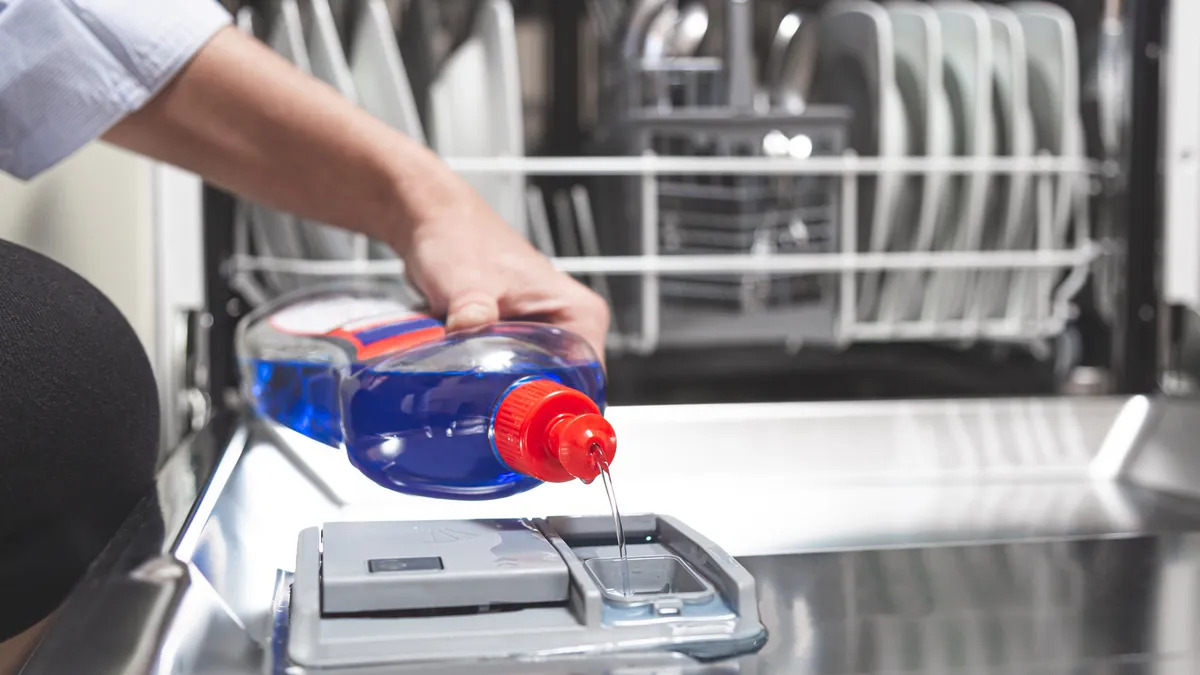
Step 5: Clean the Detergent Dispenser
Check the detergent compartment for leftover powder, liquid, or hardened residue.
Use a damp cloth to wipe the dispenser and its surrounding area. An old toothbrush can help reach narrow edges and corners.
Don’t force the dispenser open or remove it unless your dishwasher manual explains how to do so.
Keeping the dispenser clean helps ensure detergent can be released properly during a wash cycle.
Step 6: Check the Bottom of the Dishwasher
Look carefully around the bottom of the dishwasher for food particles and other debris.
Remove anything that you can safely reach. Be cautious around the drain area and don’t take apart internal components unless the manufacturer provides instructions for doing so.
If you notice standing water after every cycle, don’t assume that cleaning alone will solve the issue. Persistent drainage problems may require professional attention.
Step 7: Run an Empty Cleaning Cycle
Once you’ve cleaned the removable and accessible parts, run an empty cycle if your dishwasher has a cleaning or maintenance program.
Some manufacturers recommend using a dedicated dishwasher cleaner. If so, follow the product instructions and the dishwasher manufacturer’s recommendations.
White vinegar is sometimes used as a household cleaning method, but it isn’t appropriate for every dishwasher. If your manufacturer permits it, follow the recommended amount and placement.
Never mix vinegar with bleach or other cleaning chemicals.
Step 8: Freshen the Dishwasher With Baking Soda
If your dishwasher manufacturer allows baking soda, it can be used as a simple way to freshen the interior.
After completing the appropriate cleaning cycle, a small amount of baking soda may help reduce lingering odors.
However, don’t rely on baking soda to hide a persistent smell. If the odor keeps returning, inspect the filter, door seal, drain area, and other places where food residue may be trapped.
Removing the source of the smell is more effective than simply covering it.
Step 9: Clean the Exterior
The outside of the dishwasher needs attention too.
Use a soft, damp microfiber cloth to wipe fingerprints, food splashes, and dust from the door and control panel.
For stainless-steel surfaces, follow the manufacturer’s cleaning recommendations. Avoid abrasive materials that could leave scratches.
Dry the surface with a clean cloth to prevent water marks.
How Often Should You Clean a Dishwasher?
How frequently you should clean your dishwasher depends on how often you use it.
For a household that runs the dishwasher every day, checking the filter weekly and giving the appliance a more thorough clean about once a month can be a useful routine.
If you use the dishwasher less often, you may not need to clean it as frequently.
Pay attention to warning signs such as bad odors, food particles left on dishes, visible buildup, or poor drainage. These signs may indicate that the dishwasher needs attention sooner.
Simple Habits to Keep Your Dishwasher Clean
A few small habits can make dishwasher maintenance much easier.
Scrape large pieces of food from dishes before loading them. There’s usually no need to completely pre-wash dishes unless your dishwasher manufacturer recommends it.
Don’t overload the racks. Water needs enough room to circulate around dishes.
Check the filter regularly and clean it whenever you see visible buildup.
After a cycle, leaving the door slightly open when it is safe and practical can help the interior dry and reduce lingering moisture.
Common Mistakes to Avoid
One of the biggest mistakes is ignoring the filter. Cleaning the inside of the dishwasher won’t accomplish much if food particles remain trapped in the filtration system.
Another mistake is using too much detergent. More detergent doesn’t necessarily produce cleaner dishes and can contribute to residue.
Avoid pouring random household cleaners into the dishwasher. Always verify that a product is compatible with your appliance.
Finally, never combine cleaning products. In particular, don’t mix vinegar with bleach or other chemical cleaners.
Final Thoughts
Learning how to clean a dishwasher naturally can be surprisingly simple. Start by emptying the appliance, cleaning the filter, checking the spray arms, wiping the door seal, and removing visible debris.
Once the accessible parts are clean, an appropriate maintenance cycle can help freshen the interior. Baking soda or vinegar may be useful in some appliances, but always check the manufacturer’s recommendations first.
The best approach is regular maintenance rather than waiting until your dishwasher develops a strong smell or stops cleaning properly. A few minutes spent checking the filter and wiping the seals can prevent a lot of buildup later.
With a simple cleaning routine and the right care, you can keep your dishwasher fresh, functional, and ready to handle the next load of dishes.