A dishwasher is designed to clean your dishes, but the appliance itself needs regular attention too. Food particles, grease, soap residue, and mineral buildup can collect inside the machine over time. If these deposits aren’t removed, you may notice unpleasant smells, cloudy glassware, dirty filters, or dishes that don’t come out as clean as they used to.
The good news is that cleaning a dishwasher doesn’t have to be difficult. With a few basic supplies and a simple routine, you can keep the appliance fresh and working efficiently.
If you’re looking for the best way to clean a dishwasher, this guide explains the process step by step, along with practical maintenance tips that can make future cleaning easier.
Why Does a Dishwasher Need Cleaning?
It may seem strange to clean an appliance that’s constantly exposed to water and detergent, but dishwashers aren’t self-cleaning.
Small pieces of food can become trapped in the filter, spray arms, door seal, and corners of the tub. Grease and detergent residue can also accumulate over time.
Hard water can create another problem. Minerals may leave a white film on the interior or build up around small openings where water flows.
Regular cleaning helps remove this buildup before it becomes a bigger problem. It can also help prevent unpleasant odors and keep the dishwasher looking cleaner.
What You’ll Need
You don’t need a large collection of cleaning products.
For a basic dishwasher clean, gather:
-
A soft cloth or microfiber cloth
-
An old toothbrush or small cleaning brush
-
Warm water
-
Mild dish soap
-
White vinegar, if recommended for your appliance
-
Baking soda, if appropriate for your dishwasher
-
A bowl or container
Always check the manufacturer’s instructions before using vinegar, baking soda, or any other homemade cleaning method. Some dishwasher manufacturers recommend specific products or cleaning procedures.
Step 1: Empty the Dishwasher
Start by removing all dishes, glasses, cutlery, and other items.
Check the bottom of the dishwasher for loose food particles, paper labels, or other debris. Remove anything you can easily pick up by hand.
Take out the bottom rack if it makes the interior easier to access.
This is also a good opportunity to inspect the dishwasher for anything that may have fallen underneath the rack.
Step 2: Clean the Dishwasher Filter
The filter is one of the most important areas to clean.
Depending on your dishwasher model, the filter may be located at the bottom of the tub and may twist or lift out. Check the user manual if you’re unsure how to remove it.
Rinse the filter under warm running water. Use a soft brush or old toothbrush to gently remove trapped food and grease.
Avoid using an aggressive brush that could damage the filter.
Once it is clean, rinse it thoroughly and reinstall it according to the manufacturer’s instructions.
A clogged filter is one of the common reasons a dishwasher can develop odors or leave food particles on dishes, so don’t overlook this step.
Step 3: Check the Spray Arms
The spray arms need clear openings so water can circulate properly.
Inspect the small holes along each spray arm. Food particles and mineral deposits can sometimes block them.
If you see debris, gently remove it with a soft brush or suitable tool recommended by the manufacturer.
Don’t force anything deep into the openings, as you could damage the spray arm.
After cleaning, make sure the arms can rotate freely.
Step 4: Wipe the Door and Seals
The dishwasher door and rubber seals can collect grime that isn’t always obvious.
Use a soft cloth dampened with warm water to wipe around the door edges and gasket.
For stubborn residue, a small amount of mild dish soap can help. Avoid harsh chemicals unless your dishwasher manufacturer specifically recommends them.
Pay attention to the bottom edge of the door, where food and water can sometimes collect.
Dry the seal with a clean cloth when you’re finished.
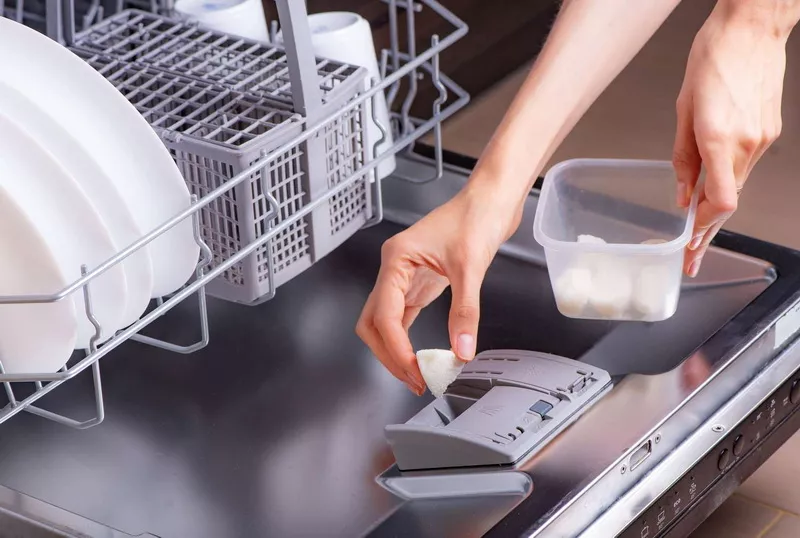
Step 5: Clean the Detergent Dispenser
Detergent residue can build up around the dispenser, especially if it isn’t rinsed regularly.
Wipe the dispenser with a damp cloth and remove any hardened detergent.
If necessary, use a small brush to clean around the edges and hinges.
Make sure the dispenser can open and close properly before running the dishwasher again.
Step 6: Check the Drain Area
Look around the bottom of the dishwasher for food particles or other debris.
Some models have a removable cover near the drain area, while others have different designs. Don’t remove components unless your manufacturer’s instructions explain how to do so.
Remove any visible debris you can safely reach.
If water is consistently remaining in the bottom of the dishwasher after a cycle, there may be a drainage issue that requires more than routine cleaning.
Step 7: Run a Cleaning Cycle
Once you’ve cleaned the removable and accessible parts, run an empty cleaning cycle if your dishwasher has a dedicated cleaning or maintenance program.
Some manufacturers recommend a specific dishwasher-cleaning product. Follow the instructions in your appliance manual or on the cleaner’s label.
If your manufacturer permits household cleaning methods, white vinegar may sometimes be used for dealing with certain types of residue. However, vinegar isn’t suitable for every dishwasher or every component, so don’t assume it’s universally safe.
Avoid mixing vinegar with bleach or other cleaning chemicals.
Step 8: Freshen the Interior
If your dishwasher has a lingering odor and the manufacturer allows the use of baking soda, a small amount may help freshen the interior.
Follow your appliance’s care instructions before trying this method.
The more important step, however, is finding the source of the odor. A dirty filter, food trapped around the seals, or buildup near the drain may need attention.
Simply masking the smell won’t solve the underlying problem.
How Often Should You Clean a Dishwasher?
There’s no single schedule that works for every household.
If you use your dishwasher every day, checking the filter weekly and giving the interior a more thorough cleaning about once a month can be a practical routine.
If you use it less frequently, you may not need to clean it as often.
The important thing is to pay attention to signs such as unpleasant smells, visible buildup, dirty dishes, or water draining slowly.
Regular light maintenance is usually easier than waiting until the dishwasher has significant buildup.
How to Keep Your Dishwasher Cleaner
A few simple habits can reduce the amount of cleaning required.
Scrape large pieces of food from dishes before loading them. You don’t necessarily need to pre-rinse everything unless your dishwasher manufacturer recommends it, but large food particles shouldn’t go into the machine.
Avoid overloading the dishwasher because crowded dishes can prevent water from reaching all surfaces properly.
Clean the filter regularly and check the spray arms from time to time.
It’s also helpful to leave the dishwasher door slightly open after a cycle when practical and safe. This can allow the interior to dry rather than remaining damp.
Common Dishwasher Cleaning Mistakes
One common mistake is ignoring the filter. Cleaning the interior won’t help much if food debris is still trapped where dirty water circulates.
Another mistake is using too much detergent. More detergent doesn’t necessarily mean cleaner dishes and may contribute to residue.
You should also avoid using random household chemicals inside the appliance. Always check whether a product is compatible with your dishwasher before using it.
Finally, don’t assume an unpleasant smell means you simply need more fragrance. Find and remove the source of the buildup instead.
Final Thoughts
The best way to clean a dishwasher is to focus on the areas where food, grease, and residue actually collect. Start with the filter, then inspect the spray arms, door seals, detergent dispenser, and drain area. Once those parts are clean, an appropriate maintenance cycle can help freshen the interior.
You don’t need to wait until your dishwasher smells bad or stops cleaning properly. A few minutes of regular maintenance can help prevent larger buildup and keep the appliance in better working condition.
Always follow your dishwasher manufacturer’s instructions, particularly when using vinegar, baking soda, commercial cleaners, or when removing internal components. With the right routine, keeping your dishwasher clean can be a simple part of regular kitchen maintenance.