Bathroom mold is a common household problem. Warm temperatures, frequent showers, poor ventilation, and moisture can create the perfect conditions for mold to grow on walls, ceilings, grout, shower curtains, and other damp surfaces.
Small areas of bathroom mold can often be cleaned with the right approach. However, simply wiping away visible mold isn’t always enough. If the underlying moisture problem remains, the mold may return.
The best way to remove mold from a bathroom is to clean the affected surface safely, reduce moisture, improve ventilation, and choose cleaning products that are appropriate for the material you’re treating.
This guide covers practical mold-removal methods and buying tips to help you choose the right supplies for the job.
Why Does Mold Grow in Bathrooms?
Bathrooms naturally produce a lot of moisture. Every shower or bath releases water vapor into the air, and that moisture can settle on cooler walls, ceilings, tiles, and fixtures.
Mold is more likely to appear when moisture remains for long periods.
Common causes include:
-
Poor bathroom ventilation
-
Leaking pipes or faucets
-
Damp towels and bath mats
-
Water collecting around the shower or tub
-
Condensation on walls and windows
-
Damaged or aging grout and caulk
Before cleaning mold, identify why it is growing. Otherwise, you may find yourself cleaning the same spots repeatedly.
What You Need to Remove Bathroom Mold
For a small household mold problem, you may need:
-
Rubber gloves
-
Protective eyewear
-
A mask appropriate for the cleaning situation
-
Scrub brush or old toothbrush
-
Microfiber cloths
-
Bucket
-
Bathroom-safe mold cleaner
-
Mild detergent
-
Clean water
-
Dry towels
-
Fan or ventilation source
Choose cleaning products based on the surface you’re treating. A product suitable for ceramic tile may not be appropriate for painted walls, natural stone, or other materials.
Step 1: Improve Ventilation
Before starting, increase airflow in the bathroom.
Turn on the exhaust fan and, where practical, open a window or door to improve ventilation. Keep the area well ventilated during and after cleaning.
Good ventilation is important because some cleaning products can produce irritating fumes. Never mix cleaning chemicals, particularly products containing bleach with ammonia or acidic cleaners.
Step 2: Protect Yourself
Mold and cleaning products can both cause irritation, so basic precautions are worthwhile.
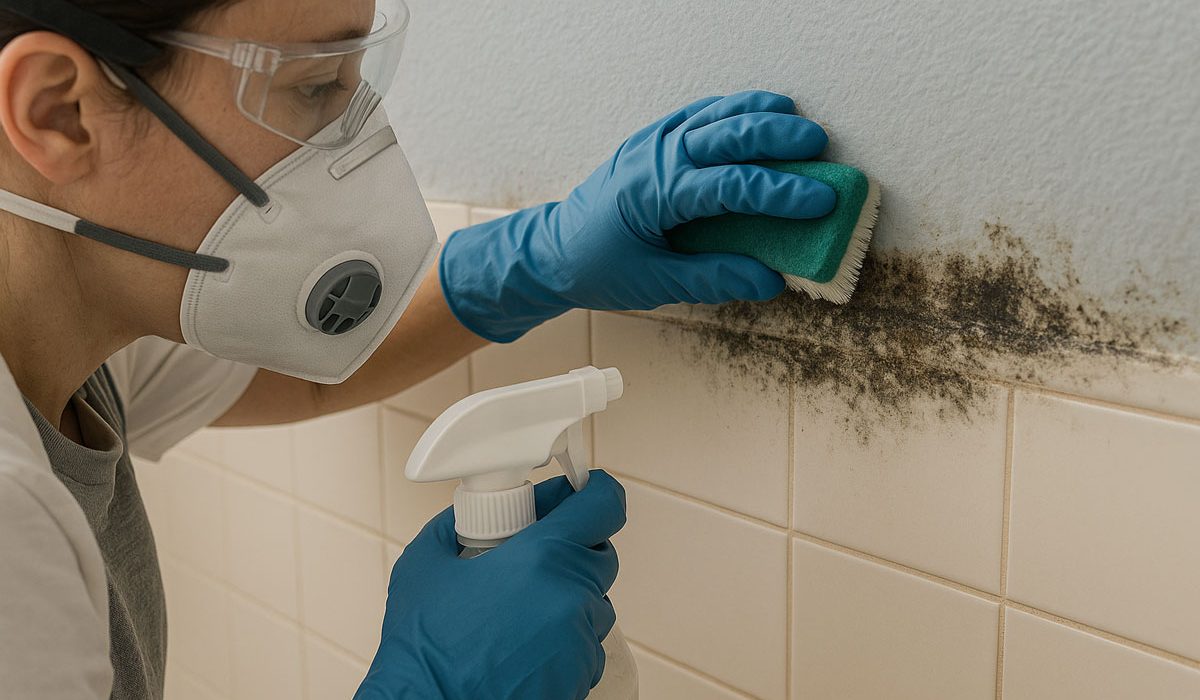
Wear gloves and eye protection when cleaning visible mold. If you’re dealing with a larger area, strong odors, or significant mold growth, additional respiratory protection and professional advice may be appropriate.
People with allergies, asthma, or other sensitivities may want to avoid being in the bathroom during cleaning.
Step 3: Clean Small Moldy Areas
For small areas on suitable hard, non-porous surfaces, start with a mild detergent solution and a damp cloth or scrub brush.
Gently scrub the affected area to remove surface growth and dirt. Don’t use excessive force, especially around grout or caulk that may already be damaged.
After cleaning, rinse the surface as appropriate and dry it thoroughly.
Step 4: Use a Mold-Cleaning Product When Needed
If ordinary cleaning doesn’t remove the discoloration, you may consider a commercial bathroom mold or mildew cleaner.
When buying one, check the label carefully. Look for a product that specifically states the surfaces it can be used on.
Some formulas are designed for tile, grout, fiberglass, and other bathroom surfaces, while others may be unsuitable for painted surfaces or natural stone.
Follow the manufacturer’s instructions regarding application time, ventilation, rinsing, and protective equipment.
Using more product than recommended won’t necessarily produce better results.
What Should You Look for When Buying Mold Remover?
There are many bathroom mold cleaners on the market, so it helps to focus on practical features rather than marketing claims.
Surface Compatibility
This should be one of your first considerations. Make sure the product is suitable for the surface you’re treating.
Application Method
Spray bottles are convenient for walls, shower areas, and grout. Gel formulas can be useful when you want a product to stay in place on vertical surfaces.
Odor
Some mold cleaners have strong chemical odors. If ventilation is limited, consider the manufacturer’s safety instructions and whether the product is appropriate for your bathroom.
Contact Time
Check how long the product needs to remain on the surface. A cleaner that requires a long contact period may not be convenient for every situation.
Rinsing Requirements
Some products need to be rinsed after treatment, while others have different instructions. Always follow the label.
Material Safety
If your bathroom contains marble, granite, natural stone, painted surfaces, or specialty finishes, verify compatibility before use.
Natural Options for Bathroom Mold
Some people prefer household ingredients such as white vinegar or baking soda for small cleaning jobs.
However, natural doesn’t automatically mean safe for every surface or situation. Vinegar, for example, is acidic and may damage or dull certain stone surfaces.
Baking soda can provide mild abrasive cleaning and may help with odors, but it shouldn’t be treated as a universal mold solution.
For persistent or extensive mold growth, rely on appropriate professional guidance rather than repeatedly experimenting with household ingredients.
Don’t Forget the Caulk and Grout
Bathroom mold often appears around shower grout and silicone caulk because these areas stay damp.
If mold has penetrated deeply into old, damaged caulk, surface cleaning may not solve the problem. In some cases, the affected caulk needs to be removed and replaced.
Grout can also become stained or damaged over time. If cleaning doesn’t restore it, repairing or replacing damaged grout may be more effective than repeatedly applying stronger cleaners.
How to Prevent Mold From Coming Back
Removing existing mold is only half the job. Moisture control is what helps prevent it from returning.
Run the bathroom exhaust fan during showers and for a while afterward. Wipe excess water from shower walls and doors, and don’t leave wet towels bunched up on the floor.
Repair leaking faucets, pipes, or shower fixtures promptly.
You should also check areas where condensation regularly forms. Improving airflow and reducing persistent dampness can make the bathroom less attractive to mold growth.
When Should You Call a Professional?
Small areas of surface mold are different from extensive or recurring mold problems.
Consider professional help if mold covers a large area, keeps returning despite moisture control, appears after significant water damage, or seems to have penetrated porous building materials.
Professional assessment may also be appropriate when you suspect mold behind walls, ceilings, cabinets, or other inaccessible areas.
Trying to remove extensive growth yourself can spread contamination and expose you to unnecessary risks.
Common Mistakes to Avoid
Avoid these common bathroom mold-cleaning mistakes:
-
Mixing different cleaning chemicals
-
Cleaning without ventilation
-
Ignoring leaks or moisture problems
-
Using a product on a surface it isn’t designed for
-
Scrubbing damaged grout aggressively
-
Assuming visible mold is the only problem
-
Using excessive amounts of cleaning chemicals
-
Painting over mold without addressing the moisture source
Final Thoughts
The best way to remove mold from a bathroom is to combine careful cleaning with good moisture control. For small areas, appropriate cleaning products and gentle scrubbing may be enough. For recurring, extensive, or hidden mold, professional assessment can be the safer choice.
When buying a mold remover, pay attention to surface compatibility, application method, safety instructions, odor, and contact time rather than simply choosing the strongest-sounding product.
Most importantly, keep the bathroom dry and well ventilated. A cleaner bathroom isn’t just about removing the mold you can see; it’s about creating an environment where mold has fewer opportunities to grow in the first place.