Carpet stains are almost impossible to avoid. A spilled cup of coffee, muddy shoes, pet accidents, or a dropped plate of food can quickly turn a clean carpet into a noticeable mess. The good news is that you don’t always need an expensive professional service to deal with everyday stains.
The best way to remove carpet stains depends on what caused the stain, how long it has been there, and what type of carpet you have. Choosing the right cleaning method and product can make the difference between removing a stain completely and accidentally making it worse.
In this guide, we’ll look at practical carpet stain removal methods, useful cleaning products, and buying tips to help you choose the right solution for your home.
What Is the Best Way to Remove Carpet Stains?
The most important rule is to act quickly. Fresh spills are generally easier to deal with because they haven’t had as much time to soak into the carpet fibers.
Start by gently blotting the spill with a clean, absorbent cloth. Don’t rub aggressively. Scrubbing can spread the stain and push the liquid deeper into the carpet.
Once you’ve removed as much of the spill as possible, use a carpet-safe cleaning solution suitable for the type of stain and carpet.
Step 1: Identify the Stain
Before reaching for a cleaner, try to figure out what you’re dealing with.
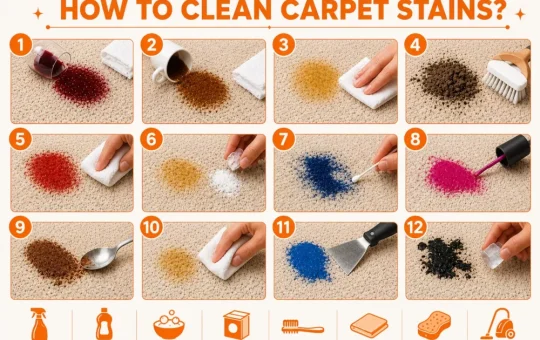
Different stains require different approaches. Common carpet stains include:
-
Coffee and tea
-
Red wine and fruit juice
-
Grease and cooking oil
-
Mud and dirt
-
Pet urine and other accidents
-
Ink
-
Food and sauces
-
Makeup
For example, an oily stain may need a product designed to break down grease, while a water-based drink spill may respond well to a mild carpet cleaner.
If you’re unsure, check the cleaning instructions provided by the carpet manufacturer.
Step 2: Blot Instead of Scrubbing
This simple technique can prevent a small spill from becoming a large stain.
Use a white or light-colored cloth and gently press it against the affected area. Work from the outside of the stain toward the center. This helps prevent the stain from spreading.
Continue blotting with clean sections of the cloth until you’re no longer transferring much liquid.
Avoid rubbing back and forth. Although it may feel like you’re cleaning faster, aggressive rubbing can damage carpet fibers and make some stains harder to remove.
Step 3: Choose the Right Carpet Stain Remover
There are many carpet stain removers available, so choosing one can be confusing.
Look for a product that specifically states it is suitable for your carpet type. If your carpet is made from a delicate natural fiber such as wool, be especially careful. Some general-purpose cleaners may not be appropriate.
For synthetic carpets, you may have more cleaning options, but it’s still important to follow the product instructions.
If you’re buying a carpet cleaner for regular household use, consider these factors:
-
Type of stains it targets
-
Carpet compatibility
-
Ease of application
-
Drying time
-
Residue left behind
-
Odor
-
Whether it requires rinsing
-
Size and price
A product isn’t necessarily better simply because it costs more.
Step 4: Test the Cleaner First
Before applying a new stain remover to a visible area, test it somewhere less noticeable.
Apply a small amount according to the manufacturer’s instructions and wait to see whether it causes discoloration or changes the texture of the carpet.
This small test can save you from accidentally creating a much larger problem.
Step 5: Treat the Stain Carefully
Once you’ve confirmed that the product is safe for your carpet, apply it as directed.
Don’t automatically use more cleaner because the stain looks difficult. Excess product can leave residue in the carpet and may attract dirt later.
Allow the product to work for the recommended amount of time. Then blot or rinse as instructed.
For particularly stubborn stains, you may need to repeat the process rather than aggressively scrubbing the carpet.
Natural Methods for Carpet Stains
Some homeowners prefer to start with simple household ingredients.
For certain fresh spills, plain water and a clean cloth may be enough. A small amount of mild dish soap diluted with water can also help with some stains.
Baking soda is commonly used to absorb odors, particularly on carpets affected by unpleasant smells. However, household remedies aren’t suitable for every carpet or stain.
Be cautious with acidic ingredients such as vinegar, especially on delicate carpet fibers or carpets with specific manufacturer’s care requirements.
Natural doesn’t automatically mean risk-free, so always test a cleaning method first.
When Should You Use a Carpet Cleaning Machine?
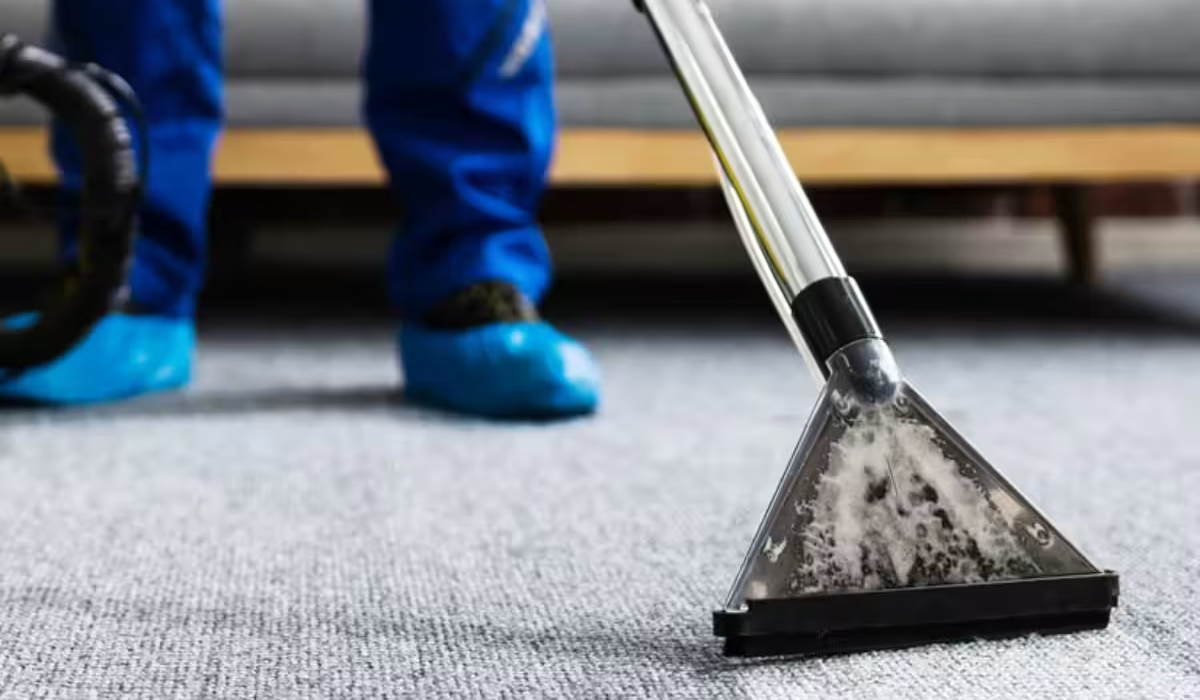
A carpet cleaning machine can be useful when stains cover a larger area or when your carpet needs a deeper clean.
Portable spot cleaners are convenient for individual stains and small accidents. Full-size carpet cleaners are better suited to larger areas and routine deep cleaning.
When choosing a machine, consider:
Suction Power
Good suction helps remove dirty water from the carpet, which can reduce drying time.
Tank Capacity
A larger tank means fewer refills, which can be useful when cleaning several rooms.
Weight
If you need to carry the machine upstairs or store it in a small space, a lightweight model may be more practical.
Attachments
Useful attachments can make it easier to clean stairs, upholstery, corners, and small spots.
Cleaning Solution Compatibility
Check which solutions the machine accepts. Some machines work best with specific formulas.
Buying Tips for Carpet Stain Removers
Don’t buy a stain remover based only on attractive packaging or strong marketing claims. Instead, think about the stains you actually encounter at home.
If you have pets, an enzymatic cleaner designed for pet-related stains and odors may be useful. If food and drink spills are your main concern, look for a versatile everyday carpet cleaner.
Read the label carefully and check whether the product is designed for your carpet material.
It’s also worth checking customer reviews for recurring issues such as strong odors, excessive residue, difficult application, or discoloration. Reviews shouldn’t replace the manufacturer’s instructions, but they can provide useful information about real-world use.
Common Carpet Cleaning Mistakes to Avoid
Some cleaning habits can make stains worse.
Avoid using excessive water, especially if you can’t extract it properly. Don’t mix different cleaning chemicals together, as unexpected chemical reactions can occur.
Never assume a stain remover is safe simply because it worked on someone else’s carpet. Carpet fibers, dyes, backing materials, and finishes can vary.
Also, don’t ignore old stains simply because they’ve dried. They may require a different treatment, and repeated aggressive cleaning can damage the surrounding fibers.
When to Call a Professional
DIY carpet stain removal works well for many everyday accidents, but some situations are better handled by a professional.
Consider professional cleaning if a stain is extensive, has penetrated deeply into the carpet, has an unpleasant persistent odor, or hasn’t responded to appropriate home treatment.
Professional help may also be worthwhile for delicate or expensive carpets where experimenting with household cleaners could cause permanent damage.
Final Thoughts
The best way to remove carpet stains is usually to act quickly, blot rather than scrub, identify the type of stain, and use a carpet-safe cleaning method.
When buying a stain remover or carpet cleaning machine, focus on compatibility, ease of use, cleaning performance, and the types of stains you regularly deal with at home. You don’t necessarily need the most expensive product. The right product for your particular carpet is what matters most.
With a little patience and the right technique, many everyday carpet stains can be treated effectively without replacing the carpet or immediately calling a professional.