Hardwood floors can make a room feel warm, elegant, and inviting. They are also durable enough to last for decades when properly cared for. But keeping them looking their best requires a little more than a quick sweep every now and then.
Dust, dirt, spills, pet hair, and everyday foot traffic can gradually make hardwood floors look dull. The wrong cleaner or too much water can also damage the finish. That is why knowing the best way to clean hardwood floors is just as important as choosing the right cleaning products.
The good news is that hardwood floor care does not have to be complicated. With the right routine, a suitable cleaner, and a few simple habits, you can keep your floors clean without putting unnecessary wear on the surface.
What Is the Best Way to Clean Hardwood Floors?
The safest approach is usually simple: remove loose dirt first, then clean the floor with a small amount of moisture and a cleaner designed for hardwood.
Start by sweeping, dusting, or vacuuming the floor to remove grit and debris. This step matters because tiny particles can act like sandpaper when walked over, gradually creating scratches.
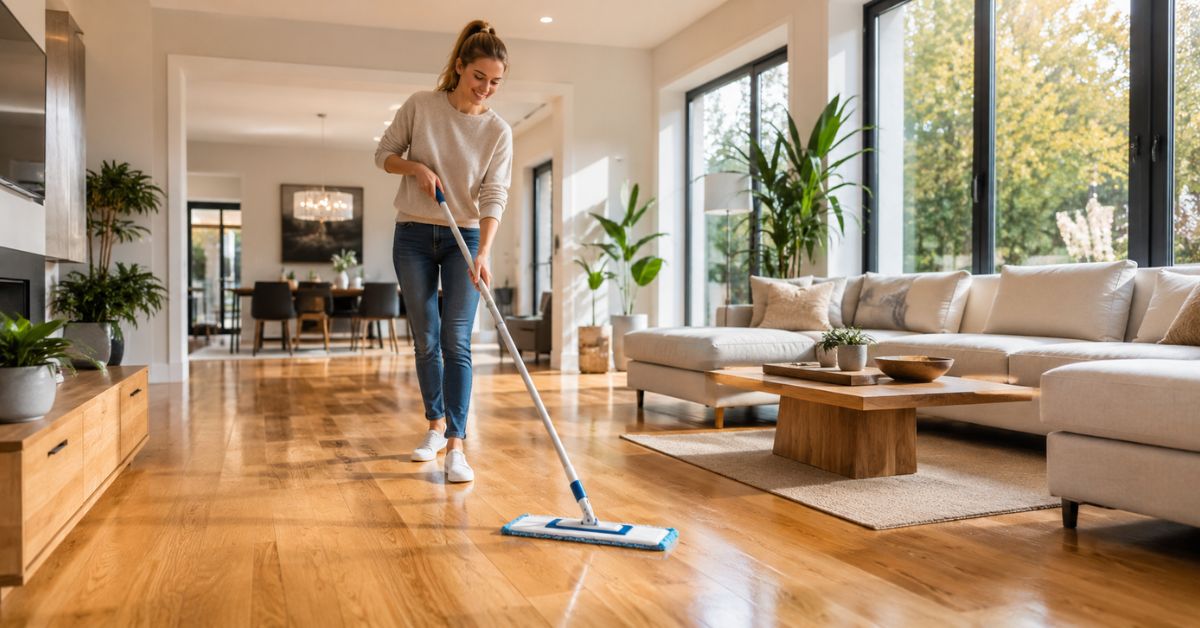
After removing loose dirt, use a slightly damp microfiber mop with a hardwood-floor cleaner suitable for your floor’s finish.
The key is to avoid soaking the floor. Hardwood and excessive water are not a good combination. Water can seep into seams and potentially cause swelling, staining, or other damage.
Step 1: Remove Dust and Dirt
Before using any liquid cleaner, clear away loose dirt.
A soft-bristle broom, dust mop, or vacuum designed for hard floors can work well. If you use a vacuum, make sure it is appropriate for hardwood and does not have a brush or setting that could scratch the finish.
Pay particular attention to high-traffic areas such as entrances, hallways, and spaces around the kitchen.
For homes with pets, regular vacuuming is especially useful because pet hair and fine grit can accumulate quickly.
Step 2: Deal With Spills Quickly
Accidents happen. A glass of water gets knocked over, food falls on the floor, or muddy shoes leave marks near the door.
The best approach is to clean spills as soon as possible.
Use a soft, absorbent cloth to blot up liquid rather than allowing it to sit on the floor. For sticky spots, use a slightly damp microfiber cloth and a hardwood-safe cleaner if necessary.
Avoid scrubbing aggressively. A gentle approach is usually enough for everyday spills.
Step 3: Choose the Right Hardwood Floor Cleaner
Not every floor cleaner is suitable for hardwood.
When shopping for a hardwood floor cleaner, look for a product specifically labeled for finished wood floors. Avoid assuming that a cleaner designed for tile, vinyl, or other hard surfaces will also be appropriate for wood.
Before buying, check whether the product is compatible with your particular floor finish.
A good hardwood floor cleaner should be easy to apply, leave little residue, and be appropriate for regular maintenance.
If you are unsure about your floor’s finish, check the flooring manufacturer’s care instructions or ask a flooring professional.
Step 4: Use a Microfiber Mop
A microfiber mop is a practical choice for hardwood floors because it can pick up fine dust and dirt without being overly abrasive.
Lightly dampen the mop rather than soaking it. The floor should not be left visibly wet after cleaning.
Work in manageable sections and follow the direction of the wood grain when practical. If excess moisture remains behind, wipe it up with a dry microfiber cloth.
Steam mops are another area where caution is important. Heat and moisture can potentially damage certain hardwood floors and finishes, so do not use a steam mop unless the flooring manufacturer specifically says it is safe.
How Often Should You Clean Hardwood Floors?
There is no single schedule that works for every home.
For everyday maintenance, dusting or vacuuming several times a week can help prevent dirt from building up. You may need to clean more frequently if you have children, pets, or heavy foot traffic.
A deeper cleaning can usually be done as needed rather than on a strict schedule.
For example:
-
Daily: Wipe up spills and obvious messes.
-
Several times a week: Sweep, dust, or vacuum.
-
Weekly: Damp-mop high-traffic areas if needed.
-
Occasionally: Give the entire floor a more thorough cleaning.
The goal is not to use cleaning products as often as possible. It is to remove dirt before it has a chance to scratch or dull the floor.
What Should You Avoid When Cleaning Hardwood Floors?
Knowing what not to use is just as important as knowing what works.
Avoid excessive water, abrasive scrubbers, and harsh cleaning products unless they are specifically recommended for your flooring.
You should also be cautious with homemade cleaning solutions. Vinegar is often suggested as a natural floor cleaner, but its acidity may affect certain finishes when used repeatedly. It is better to follow the flooring manufacturer’s recommendations rather than assuming a homemade solution is safe.
Similarly, avoid wax-based products unless your particular floor is designed to be waxed. Applying the wrong product can leave behind buildup or make future refinishing more difficult.
Buying Tips for Hardwood Floor Cleaning Products
If you are shopping for floor-cleaning supplies, you do not need a huge collection of products.
A few basics can cover most cleaning needs.
Look for a Hardwood-Specific Cleaner
Choose a cleaner intended for finished hardwood floors. Read the label carefully and check whether it is suitable for your floor’s finish.
Choose Quality Microfiber Cloths
Microfiber cloths and mop pads are gentle, reusable, and effective at picking up dust. Having several washable pads on hand can make regular cleaning easier.
Consider Your Floor’s Finish
Different hardwood floors may have different finishes, including polyurethane and other protective coatings. The safest cleaner for one type of floor may not be ideal for another.
If you recently installed new flooring, keep the manufacturer’s care instructions. They can be more useful than generic cleaning advice.
Avoid Products That Leave Heavy Residue
Some cleaners can leave a film behind if they are overused. A product that cleans effectively without leaving a noticeable residue is generally easier to maintain over time.
Simple Ways to Protect Hardwood Floors
Cleaning is only one part of hardwood floor care. Prevention can make an even bigger difference.
Place doormats at entrances to catch dirt before it reaches the floor. In rainy or muddy weather, encourage people to remove wet or dirty shoes.
Felt pads under furniture legs can help reduce scratches, especially on chairs that move frequently.
Keep your pet’s nails trimmed if you have animals at home, and clean up grit or spilled water promptly.
Also, avoid dragging heavy furniture across the floor. Lift it when possible or use appropriate furniture-moving protection.
What If Your Hardwood Floor Looks Dull?
If your floor still looks dull after cleaning, resist the temptation to keep adding more cleaner.
Dullness can result from residue, an aging finish, scratches, or normal wear. Adding layers of cleaning product may make the problem worse.
Start by checking whether residue is causing the appearance. If cleaning does not improve the finish, the floor may need professional maintenance or refinishing rather than another cleaning product.
Final Thoughts
The best way to clean hardwood floors is usually the simplest: remove loose dirt regularly, clean spills quickly, use a hardwood-safe cleaner, and keep moisture to a minimum.
A microfiber mop and a suitable floor cleaner can handle most everyday cleaning jobs. Just remember that hardwood floors are not meant to be saturated with water, and products that work well on tile or other surfaces may not be suitable for wood.
With regular dusting, careful damp cleaning, and a few protective habits, your hardwood floors can stay clean, attractive, and comfortable for years to come.