Your washing machine cleans your clothes, but it also needs a good cleaning from time to time. Detergent residue, fabric softener, lint, dirt, and moisture can build up inside the drum, detergent drawer, and rubber seal. If that buildup is left for too long, your washing machine may start to smell musty, and your freshly washed clothes may not smell as fresh as they should.
The good news is that you can often clean a washing machine naturally using simple household ingredients and a little regular maintenance. You do not necessarily need strong chemical cleaners to keep your washer fresh.
This guide explains how to clean a washing machine naturally, step by step, along with a few habits that can help prevent odors and buildup in the future.
Why Clean Your Washing Machine Naturally?
A washing machine stays damp for long periods, especially when the door or lid is kept closed between loads. That moisture, combined with detergent and dirt, creates the perfect environment for residue to accumulate.
Natural cleaning methods can be appealing if you prefer simple household ingredients and want to avoid using strong cleaning products unnecessarily.
Regular cleaning can help:
-
Remove detergent and fabric-softener residue
-
Reduce unpleasant odors
-
Clean dirt from accessible areas
-
Keep the rubber seal fresher
-
Prevent buildup in the detergent drawer
-
Maintain a cleaner washing environment
However, always check your washing machine’s manual before using any homemade cleaning method. Some manufacturers may recommend specific cleaning products or advise against certain ingredients.
What You Need
Before you start, gather a few basic supplies:
-
White vinegar
-
Baking soda
-
A clean microfiber cloth
-
An old soft toothbrush
-
Warm water
-
A small bowl or container
-
A towel
You do not need to use every ingredient at the same time. In fact, vinegar and baking soda should not be mixed together in the same container, because they react with each other and largely neutralize one another.
Step 1: Empty the Washing Machine
Start by removing everything from the drum.
Check carefully for socks, tissues, coins, or other small objects. Cleaning an empty machine allows the cleaning solution and water to reach the interior surfaces without being absorbed by clothes.
If your washing machine has a dedicated drum-cleaning or tub-cleaning cycle, check the manual to see how it should be used.
Step 2: Clean the Detergent Drawer
The detergent drawer is one of the easiest parts of the washing machine to overlook.
Remove the drawer if possible and rinse it under warm water. Use a soft toothbrush to remove dried detergent, fabric softener, and other residue from corners and narrow sections.
For stubborn buildup, let the drawer soak in warm water for a few minutes before brushing it gently.
Do not forget the compartment where the drawer sits. Wipe it with a damp microfiber cloth to remove residue that may have collected inside.
Let the drawer dry before replacing it.
Step 3: Clean the Rubber Door Seal
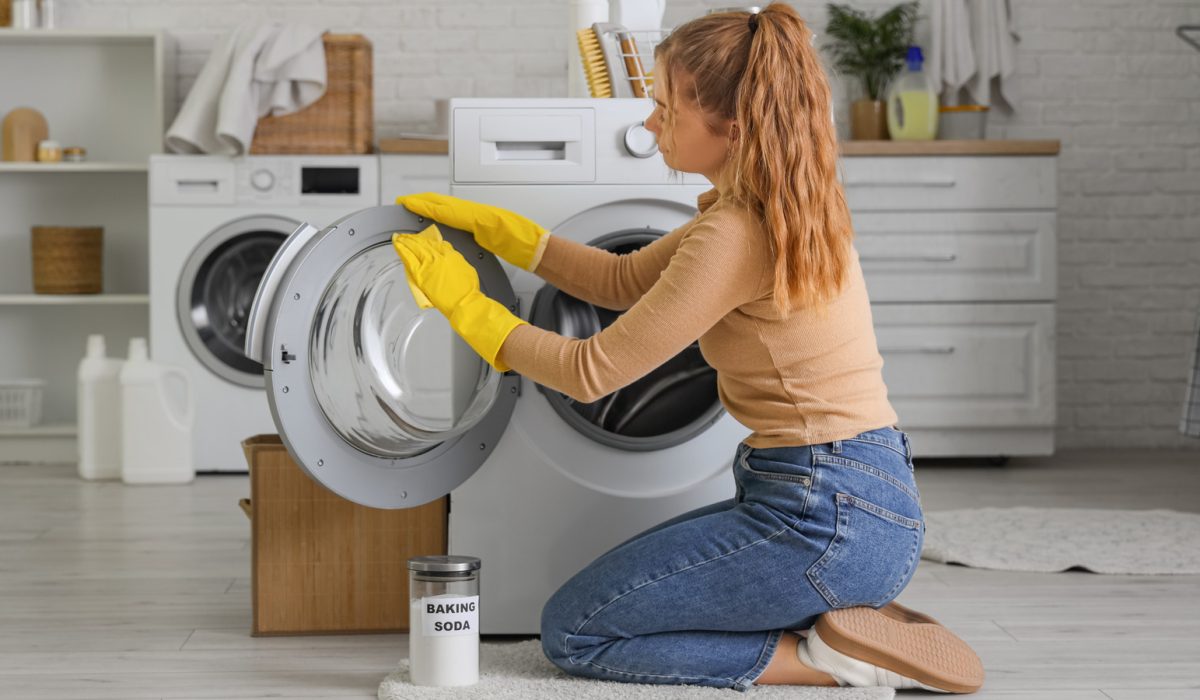
If you have a front-loading washer, take a close look at the rubber gasket around the door.
Pull the folds back gently and check for lint, hair, dirt, and trapped water. This area can remain damp between washes and may develop an unpleasant smell if it is neglected.
Dip your cloth in warm water and wipe the seal carefully. A soft toothbrush can help reach small grooves.
After cleaning, wipe the area dry with a clean towel.
Avoid using rough brushes or abrasive materials because they can damage the rubber.
Step 4: Use Baking Soda for Freshness
Baking soda is a popular household ingredient for reducing odors.
Once the drum is empty, add a small amount of baking soda to the drum or detergent compartment, depending on your machine’s instructions and design.
Run a warm or hot empty cycle if your manufacturer’s instructions allow this approach.
Baking soda can help freshen the interior and loosen some light residue. However, it should not be treated as a cure for serious mold, mechanical problems, or heavy buildup.
Step 5: Run a Vinegar Cleaning Cycle
After the baking soda cycle is complete, some people choose to run a separate cycle using white vinegar.
Add an appropriate amount of white vinegar according to your machine manufacturer’s guidance and run an empty warm cycle.
The mild acidity of vinegar can help break down certain mineral and detergent residues and may help with odors.
However, frequent use of vinegar may not be recommended for every appliance, particularly because prolonged exposure to acidic substances can affect some rubber components. Always check your washer’s manual before making vinegar part of your regular cleaning routine.
Most importantly, do not mix vinegar and baking soda together in the machine as a cleaning combination. Use them separately if your manufacturer’s guidance permits both.
Step 6: Clean the Washing Machine Filter
Your washing machine may have a drain or pump filter that catches lint, hair, coins, and other debris.
Check the owner’s manual to find its location and learn how to clean it. Some models may release water when the filter is opened, so place a towel or shallow container underneath before removing it.
Remove any visible debris and rinse the filter as instructed.
A dirty filter can contribute to drainage problems and unpleasant smells, so this part of washing machine maintenance should not be ignored.
Step 7: Wipe the Outside
Once you’ve finished cleaning the inside, give the exterior some attention too.
Use a soft, damp cloth to wipe the control panel, lid or door, and surrounding surfaces. Avoid spraying water or cleaning solution directly onto electrical controls.
For stubborn marks, use a small amount of mild soap diluted with water, provided it is safe for the appliance’s exterior finish.
How Often Should You Clean a Washing Machine Naturally?
For many households, cleaning the washing machine once a month is a reasonable routine.
You may want to clean it more often if you:
-
Do laundry almost every day
-
Frequently wash heavily soiled clothes
-
Use mostly cold-water cycles
-
Notice a musty smell
-
See residue around the detergent drawer
-
Notice buildup around the rubber gasket
The right schedule depends on how frequently you use your machine and the conditions in your home.
How to Keep Your Washing Machine Fresh
Once your washing machine is clean, a few simple habits can help keep it that way.
Remove wet clothes soon after the cycle ends. Leaving damp laundry sitting inside the drum can contribute to unpleasant odors.
If you have a front-loading machine, leave the door slightly open after a wash when it is safe to do so. This allows air to circulate and helps the interior dry.
Leave the detergent drawer slightly open as well, if practical, so moisture can evaporate.
It is also important to use the correct amount of detergent. Adding extra detergent does not necessarily make clothes cleaner. In some cases, it can leave more residue behind.
Finally, clean the rubber seal regularly and check the filter according to the manufacturer’s recommended schedule.
Is Natural Washing Machine Cleaning Always Safe?
Natural does not automatically mean suitable for every appliance.
Before using vinegar, baking soda, or any other homemade cleaning method, read your washing machine’s care instructions. Some manufacturers specifically recommend commercial cleaners or dedicated cleaning cycles.
Never combine vinegar with bleach or other cleaning chemicals. Mixing household cleaning products can create dangerous chemical reactions.
If your washing machine has persistent mold, a strong odor, poor drainage, or another mechanical issue, natural cleaning may not solve the underlying problem. In that situation, follow the manufacturer’s troubleshooting instructions or contact a qualified appliance professional.
Final Thoughts
Learning how to clean a washing machine naturally can help you maintain a fresher appliance without making the process complicated. Start by cleaning the detergent drawer and rubber seal, then clean the drum using a method approved for your machine. Don’t forget the filter and exterior.
The most important thing is consistency. A simple monthly cleaning routine, combined with good habits such as leaving the door open to dry and removing wet clothes promptly, can help prevent odors and buildup.
Always check your washing machine manufacturer’s instructions before using household ingredients. The safest cleaning method is the one that keeps your particular appliance clean without damaging its components.